In Situ
site-specific project
media: research, photography, installation,
sound art, map-art.
Every place accumulates its own experience — in the soil, in the water, in the walls.
site-specific project
media: research, photography, installation,
sound art, map-art.
Every place accumulates its own experience — in the soil, in the water, in the walls.
Substances settle, turn into artefacts, disappear and return in another form.
The project begins with an expedition to different districts of Venice, one day in each: San Marco, Cannaregio, Castello, Dorsoduro, San Polo and Santa Croce.
The project begins with an expedition to different districts of Venice, one day in each: San Marco, Cannaregio, Castello, Dorsoduro, San Polo and Santa Croce.
I walk slowly, like a bird searching for food:
I collect natural and anthropogenic artefacts - fragments of soil, branches, shards of pottery, remnants of other people’s everyday life, leaving a chalk outline drawn around the spot after collection.
I collect natural and anthropogenic artefacts - fragments of soil, branches, shards of pottery, remnants of other people’s everyday life, leaving a chalk outline drawn around the spot after collection.
The found objects are photographed in situ; their histories and routes are reconstructed. Photographs of the found items and their locations are compiled into a virtual map of the area.
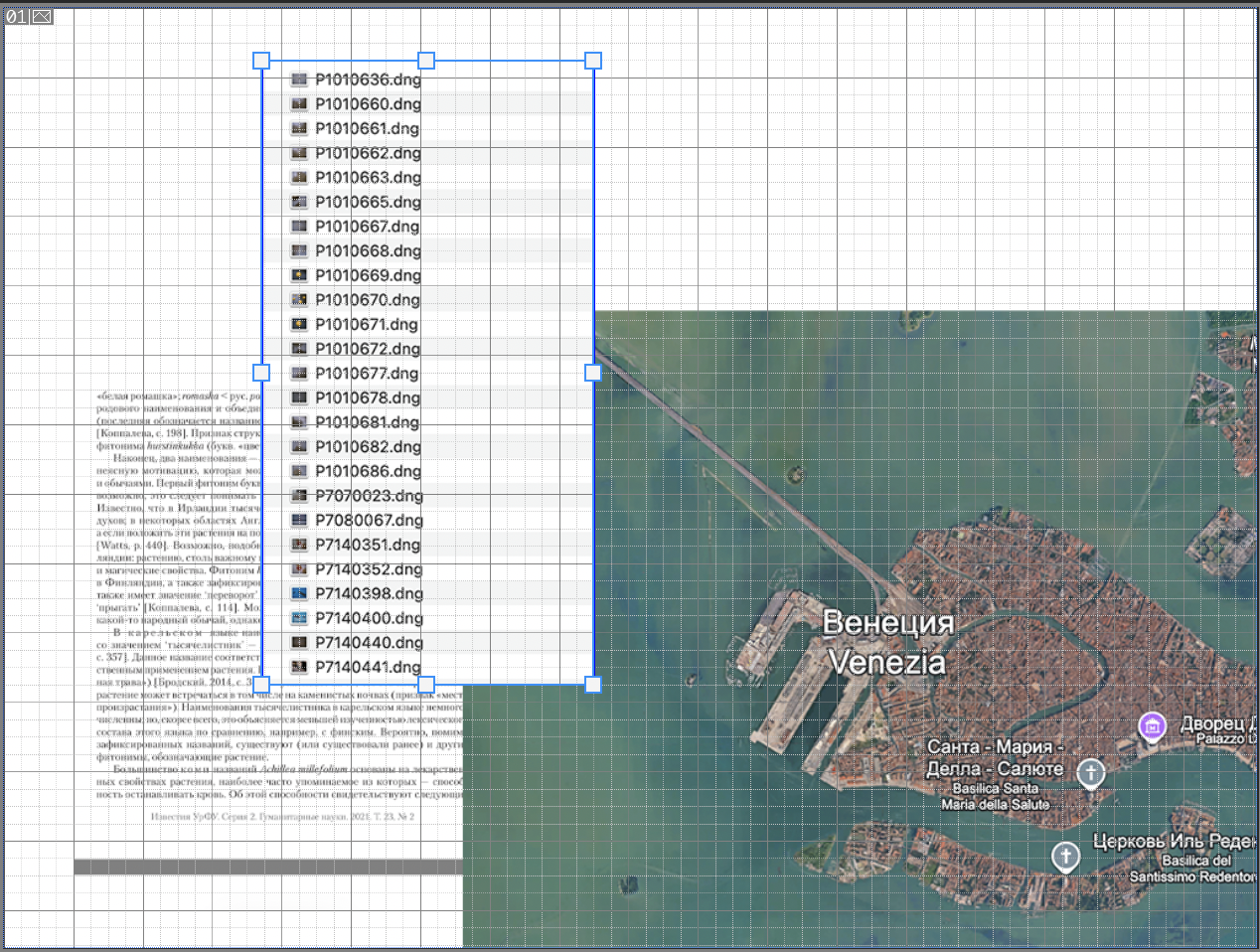
In parallel, I conduct research on the location - its history, transformations, who and what existed here before. Particular attention is paid to vessels and containers: how the place “holds” water, waste, life, memory.
From the collected materials, I create a series of vessel‑like objects (one for each district) — an assemblage of found artefacts: forms in which the experience of the place is compressed. Cement is mixed with soil and binds everything together. The created objects are placed on a printed map of the city. Each object can be touched.

The final presentation is both an archive of the research and a space of objects:
the art objects made from collected artefacts, photographs, maps of the routes, and recorded sounds from the locations.
the art objects made from collected artefacts, photographs, maps of the routes, and recorded sounds from the locations.
The viewer walks the same path again - but through the material.
FINAL
Work plan:
I. Research — space history, topography (in advance, before the residence and at the moment of residence);
II. Expedition — routes through the city's historical sites, collecting artifacts, audio recording. (6 days);
III. Systematization of materials — preparing a virtual map, describing finds, compiling a photo catalog, and mixing audio tracks (the same days, as expedition);
IV. Production — creating objects from found artifacts (10 days);
V. Display — presentation of the research and objects.
II. Expedition — routes through the city's historical sites, collecting artifacts, audio recording. (6 days);
III. Systematization of materials — preparing a virtual map, describing finds, compiling a photo catalog, and mixing audio tracks (the same days, as expedition);
IV. Production — creating objects from found artifacts (10 days);
V. Display — presentation of the research and objects.
Requested materials and mediums:
- Concrete mix;
- Quick-drying adhesive;
- Epoxy resin;
- Metal wire;
- Printed map of the сity;
- Interactive monitor with touch capability (for interactive map preferred) or printed qr-code to access a virtual map of the reserch;
- Audio system with sound playback capability;
- Printed catalog with photographs and reserch.
- Workshop suitable for working with materials;
- Outdoor space for the final exhibition (preferred).
- curatorial support in exhibition planning
- consultation on site-specific issues.
- 6 objects reflecting the life of the city;
- exploration of the area through discovered artifacts;
- virtual map;
- photographic series.
